|
|
|


Rush » srb
Питање: The slowest animals evolve the slowest?
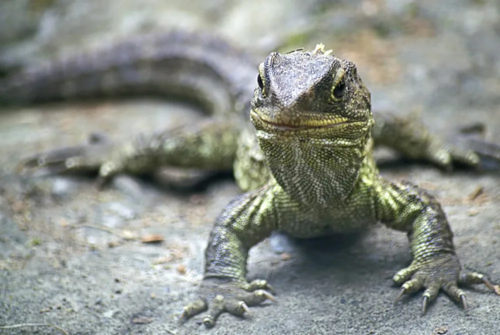
Одговор: It seems so to us, but sometimes it is not. Scientists have found the fastest evolution among animals in a species of "living dino-saur" lizard, pictured left, called the tuatara. Among them, it was a com-mon opinion that molecular evolu-tion should be the fastest among animals of external character, or morphology, which also evolves rapidly. This finding, the tuatara, reminds us how incorrect that is. To estimate the rate of evolution, the researchers found DNA sequences from the bones of ancient tuatars.
"Of course we would expect tuatara, which do everything slowly—grow slowly, reproduce slowly, and have a very slow metabolism—to evolve slowly," said Lambert, one of the researchers. "In fact, at the DNA level, these lizards are evolving extremely fast."
Among four-legged vertebrates, frogs probably develop the slowest. Some studies identify morphological evolution with species communication in social structure. Communication gives them a wider connection to the environment by including more things by learning it. For example, songbirds evolve faster, and non-singing birds interact more slowly and evolve more slowly. Whales that chatter and sing to each other more are therefore faster in development. We primates are fast, and then as humans we are fast, which evolved quite dramatically from chimpanzees, even though we are 98 percent identical to them and are considered related species.
Creatures with big brains evolve quickly, and small creatures that barely com-municate with each other evolve more slowly. Little frogs with tiny brains can barely convey the message: I'm here, and you come make babies with me. At the edge, their small communications with the brain are the size of a pea, so they change shape minimally. Here we talking about established "scientific" opinions that have not been fully tested.
Evolution happens from generation to generation, in steps of generations, and cannot be stopped, although it tends to depend on the time between parent and child. This means that the species with the slowest evolution is also the oldest when it reproduces for the first time. For example, the olive tree is one of the oldest trees to bear its first fruit. That is why it is said that you plant olives for your grandchildren, not for yourself. It can take more than 20 years before the first olive tree sprouts and 50 years before the tree produces olive fruit.
A generation time of 50 years is one of the slowest evolutions. To find a slower one, you find something with longer generation periods. Such as the "century flower," which blooms only once in a century and is actually very close to the slow production of olives by olive trees.
According to some, those who do not use sexual reproduction develop the slowest. For example, those plants that are propagated by grafting, growing rooting from a broken branch, produce only clones like two twins. There are no changes in the DNA other than copying errors. Contrast that with faster sexual reproduction, when offspring receive unique mixes of random bits of DNA from both parents.
In short, evolution takes place gradually over generations. The longer the life, the slower the process of evolution; the shorter the life, the faster it evolves. Thus, evolution is faster among viruses and bacteria, while it is slower among larger species, especially large ones like the giant sea turtle that lives for over 1,000 years.
So much for the answer as far as living beings are concerned. You didn't ask me about the non-living, and there the "evolution" would go in reverse of the assumption in the question. Namely, in special relativity, what moves faster, time runs slower. That's okay; it's expected that physical and virtual existence are opposite or very different but sometimes congruent.
Borrowing » srb
Question: Can information be "borrowed"? What do you mean by that?

Answer: The question is extracted from the correspondence and now has additions. Just as borrowing money affects your credit balance, positively or negatively, taking away or giving information has its consequences, just like backing or evading anything in general. Therefore, we evaluate "lending" according to the circumstances.
1. For example, tiktaalik is a type of fish, a non-quadrupedal vertebrate, that lived approximately 375 million years ago and is a representative species for transition to early tetrapods (quadrupeds). Without going into the motives of moving to the land, because evolution is constantly going on whether we noti-ce it or not, we can talk about "borrowing" something from the land, which did not belong to that aquatic species in the first place. Through the generations, adaptations came to save the ancestors of that fish from starvation, or the descendants were destroyed by new terrains.
2. We mean the same thing when we say that by treating people today, we are "borrowing" the health of future generations. Selfishly wanting to prolong our personal lives, we pass on the difficulties of our lives to some, but certainly pe-rsonal, descendants. Of course, this does not have to result in only bad things, just as the decision of some of our distant ancestors to wear clothes or bake food, which resulted in a reduced ability for us, their descendants, to live without aids, did not turn out to be only bad.
3. The lie steals its strength from our future, and if we come to sanctification, we are left with grief for what we missed and the anger of those who were de-ceived. Hence the success of manipulators against good people and their fail-ure against reality. This is how I once explained the application of "perceptual information" in game theory. The idea is that I consider the greater vitality of the game to be the one that has a greater sum of products and to apply this in the simulations of some (programmingly simpler) competitions.
The results showed a satisfactory correlation, and I applied this new concept to the definition of personality Traits. The lowest level of the game, the III le-ague, belonged to the "good guys"—players of low vitality. These are the ones that are closest to the principle of least action of physics: they retreat in front of the stronger and advance against the weaker. A little higher, II league are "manipulators." They know how to lie, procrastinate, or sacrifice themselves, but they disappear too much in deceptions, and reality escapes them. The quote above is about them.
4. A lie is weak, inconsistent, and inaccurate information. Because of the first, it is still perceptible, but because of the second and especially the third, it is not real. Let's remember that "reality" here is defined by what is observable, permanent, and true. In the absence of truth, a lie is, at most, existent and un-real. However, its weakness makes it attractive (the principle of minimalism) and hence its power to participate in the vitality of living beings. It gives free-dom to the substance (not to adhere to the principle of the least action sticking "like a postage stamp"), so that in return it receives something of permanence.
Since the presence of lies does not affect the "amounts of reality," does not break the laws of conservation of physics, the extent of lies is limited only by the extent of truth. Namely, there is a bijection (replacing ⊤ and ⊥ in expres-sions of the algebra of logic) and a lie, although it is often invisible and unte-nable like the truth; it is untenable. Lies, as variable forms of energy trapped by total energy quantities, are the virtual, pale, and fickle companions of truths. This is a new understanding of "algebra logic" that came out of this "information theory," and it's okay to have doubts about it.
5. For us, who can see them and react to them, lies greatly obscure reality. Physical reality does not have that problem, for it is irrelevant, because reality unconditionally follows the laws visible to itself. They are timeless and sticky information that attracts substances like gravity that pull where time dilation is greater. That is why the lies we receive about the past and therefore increase the uncertainty of our present (not the substance of physics) reduce our powers of insight into that past and its future.
The reverse is also true: when we "borrow" lies from the future, we increase our own (without immediate reality), the current uncertainties, not affecting the amount of reality, but deepening the knowledge of possible falsehoods. Lies misinform us as well as an excess of truths, burdening us with noise similar to the processes of Markov chains. In this sense, the borrowed "truth" from or about the future seduces us and changes our environment for better or for worse. In this way, acting through our body, vitality manages to change physical reality as well, turning virtual uncertainty into an objective one.
It is about the fact that with the lies of raised uncertainty, vital creatures grow possibilities. In principle, the processes tend to be less informative, of which there are more. By choosing their additional options, they choose new enviro-nments that would be non-existent to nature itself (without vital ones). This concept is new and difficult to understand at first, so I will emphasize it. By choosing, we actually choose the whole universe in which we will be.
Reality IV » srb
Question: You say lies are "unreal"; then there are as many of them as truths, and truths are "real" because they last. Isn't that wrong?
Answer: It would be as you say. However, real (or material) is something that is both:
1. observable, 2. permanently, 3. true.
When at least one of the three enumerated conditions is not met, the phenomenon is "unreal," but it can remain as "existing." A lie is therefore not a physical reality, because when in physics we really prove that something is not true — that doesn't happen.
It's okay not to understand that concept; it's completely new and very different from the usual understanding of reality. We can see this from attachments like the one shown in the image above on the left. That is the second of two reaso-ns why this idea is not widely known, and the first is because I don't want it. The concept is so powerful that I keep it to myself.
1. I take care that the total sets, separating truths from lies, are equally num-erous. They, I say, the "worlds" of truth and lies, are of the same cardinality because there is a bijection (mutually unique mapping) between them, which is shown by a simple substitution of "true" ⊤ with "false" ⊥ in every exposition of the algebra of logic. That is why, of the above three conditions of reality, they have the second assumption in common. They have the first of the assu-mptions in common, because it is not necessary that physical observables are always available to everyone, nor are lies always visible to everyone or eve-rything. However, the 3rd assumption is not common to them.
2. Just because we sometimes do something "incorrectly" does not mean that the overall result of our work must be "incorrect.". We can be "wrong" and still have things turn out "right" in the end. This is the principle of the objectivity of uncertainty of this theory. I am not saying that this applies to excessive "sins," nor to such or special "inaccuracies." You will find something similar in the algebra of logic when, for example, we obtain the truth by the negation of a lie, or if with an incorrect assumption A we have the correct implication A ⇒ B, regardless of whether statement B is true or false. However, here we go even deeper, into uncertainty that can turn out both good and bad.
3. The world of "information theory" that I am building can overcome the Gödelian incompleteness of consistent (overcorrect) deductive logics (Infor-mation Coupling, 1.3.3 Incompleteness). By going beyond inaccuracy to get to know further worlds of truth, we work similarly to mathematics, which uses inaccu-racy (e.g., by the method of reduction to contradiction) to reach accu-rate statements. So it can happen that by choosing, with our surplus freedoms, we choose a universe that mere physical substance cannot reach. I quote my last sentence from the answer to the previous question (Borrowing, 5).
4. The successes of the previous contemplation encourage me to consider the path to the same result set upside down. For example, by exhausting accuracy, inaccuracy is obtained, because the truths here are thought to be material, as opposed to untruths. However, by exhausting falsehoods, truths can also be indicated further, because their symmetry holds, ⊤ ↔ ⊥, so by negating what was said before, we get what is said next. Thus, by fantasizing around and about a structure, thus exhausting its lies, we will also uncover the truths about it. Just a step away from that is the allegation that by choosing, we are choosing a future that the universe could not reach without us.
A lie is consumed by use; it fades, unlike the truth, which is strengthened by use. Just remember Newton, and then who knows whose line "I stood on the shoulders of giants" when he answered questions about how he managed to do it all (along with the discovery of gravity). With too much use, lying lies beco-me exhausted and become unconvincing, unable to act. Then the truth will get its second chance.
Bridging » srb
Question: When is a lie useful?
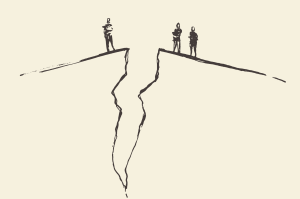
Answer: In the question, the de-finition of the term "useful" was missing, but let's assume some common meaning that we will peruse from the context.
1. Bridging can be taken as a type of lying. In social relations (see image link on the right), transitions begin with the recognition of general hu-manity in finding a common lang-uage, and when we disagree with other people, wanting not to dehumanize them, not to reduce them to a cari-cature, not to see them as less valuable. Bridging is not a matter of persuasion but of understanding and implied useful lies.
2. A slightly broader version of this is a generalization. It is general if all dogs chase squirrels. By generalizing, we usually put a few facts into broader, more universal statements. In mathematics, on the other hand, with such extensio-ns, we must not fall into incorrect statements, except when an implied or ann-ounced approximation is expressed, for example, in statistical estimation. Ho-wever, spreading a smaller statement is at best an unconfirmed truth. Gene-ralizations that are not supported by facts are called false generalizations, for example, everyone likes chocolate cake.
3. We lie to our children to protect them from difficult truths, but we also teach them to lie, for example, when we ask them to indulge themselves with gifts from their uncle or with their aunt's not-so-tasty beef stew. The above examples are from texts that interpret "prosocial lies"—lying for someone else's benefit, as opposed to "antisocial lies" that are selfish and told solely for one's own benefit.
Most research suggests that children develop the ability to lie by around age three. By the age of five, almost all children can (and will) lie to avoid puni-shment or chores. Only a minority will occasionally tell prosocial lies. From age seven to eleven, they begin to confidently lie to protect other people or to make themselves feel better and will begin to feel that prosocial lies are justified.
4. We call white lies that aim to please others, but research suggests that they are motivated by empathy and compassion. Warnekene (2015), a Harvard psychologist, had adults show young children two pictures to draw: one pretty good, the other terrible. If the adults did not show any particular pride in the picture, the children were honest about whether the picture was good or bad. If an adult were to act sad about being a bad artist, most kids would be quick to reassure them that it wasn't too bad. Children would then tell a white lie, and the older they were, the more likely they were to say that a bad drawing was good. There were no negative consequences for telling the truth to these bad artists; the kids would just like to make these strangers feel better about themselves.
In accordance with this, we say that behind every successful person has often been a teacher who inspired them and believed in them. However, we someti-mes see the reverse, that behind many very successful people are teachers who told them in their youth that they are not capable. This is strongly evidenced by the biographies of the most successful people, from scientists and writers toward the richest people. With this we acknowledge the ties of empathy with selfishness and reveal another, deeper lie, behind that white lie. A blue lie is when we protect another from a third, for example, when we lie that a brother or sister did not commit a crime. The concept of good service is again questi-oned.
5. Here, however, are the most interesting mathematical examples of the benefits of lies for us. A disjunction statement, A ∨ B, is a statement that is false iff (if and only if) both A and B are false. The conjunction of statements, A & B, is true iff both are true. Implications, A ⇒ B, are false iff the first is true and the second is not. Thus, we define the operations of the algebra of logic using both the truth ⊤ and untruths ⊥. Moreover, there is a bijection of the two, which is seen by replacing truth with falsehood in all statements, which means that there are equally many of them.
We could never understand what it means to have something if it was im-possible to not have it. Without darkness, there would be no light. Without "much," there would be no "little," whatever that is. Moreover, there are as many absences as there are presences, whatever we are talking about. In this way, we can view "lie" as the absence of "truth," so it is even easier to under-stand (Reality IV, 4) that in one way "exhaustion of accuracy results in inacc-uracy," but also, the corresponding "melting of inaccuracy remains accuracy."
The latter means that if you can sometimes lie to everyone, it does not mean that you can always lie to someone, and first, on the contrary, that the truth is not expendable. Also, more broadly, if the absence of something real can hap-pen to anything, it will not be that something real exists without everything like that. It is analogous to the second, and the first is that reality is not expendable.
6. Consistent with the above examples in the answer to the question, as well as Gödel's incompleteness theorem, truths (as well physical realities) are like islands that separate or bridge falsehoods (fictions).
Squared » srb
Question: Why would the lie be perpetuated?
Answer: This was a continuation of the previous question, so as an introduction, you can also see its answer (Bridging). However, I now focus on the "forces" of connecting inanimate with living structures. Preceding both would be (Rush) a matter of speed of evolution, and you'll see why. Much of it is a matter of balancing the principle of information minimalism and the rules of its maintenance.
1.Efficiency is perhaps among the most easily understood consequences of the principle of minimalism. Put, spontaneously striving for less action, everythi-ng strives for less information emission. It is a desire for less communication, i.e., efficiency in reducing redundant options. The same reasons lead to the way networks are organized (Graph) — with few nodes having many (equal) links and many nodes with few. Similarly, we arrive at "bridging", when a system joins with a less perceptible, unstable, or untrue fiction to reach its goal more cheaply.
Similarly, "bypasses" arise when a particle leaves our reality to approach it from the other side, although their true basis is randomness, which is parti-cularly pronounced in the micro world. I assume that under the well-known formalism, the solution of Schrödinger's wave equation, beyond randomness, an equal cause could be found in "tunneling", the phenomenon in which an atomic particle can overcome a finite potential barrier even when its energy is lower than the height (energy) of the barrier.
2. Adaptation is another important cause of connectivity in nature in general. It is visible during the process of transmitting a message through the Markov chain, when, by stringing the links, it gets closer and closer to the characteri-stic message of the chain generator, while the chain of transmitters itself be-comes a "black box," a medium whose output the message says nothing about the incoming. Lies, as well as fictions, are bridges between islands of reality, but also the glue that holds more closely related.
We know that the type of sound, wavelength, and frequency choose the type of glass with which it will interfere. By synchronizing the waves and persistently adding vibrational energy to solid bodies, we create very destructive pheno-mena. Alignment of drives and association of living cells into tissues, living beings into organizations, and reinforcement of the cracks of equals by bre-aking their structure in diversity.The latter may seem absurd until we notice that a homogeneous distribution has the most information, especially the repulsive to dead matter, from which nature principally spontaneously flees.
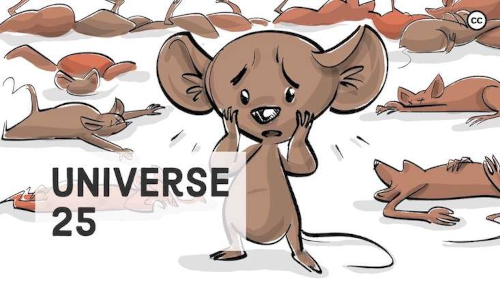
3. More as an experimental confirmation of what was said than as an added theoretical discovery, I cite an experiment done a long time ago (Death Squ-ared, 1973), which otherwise was not connected to any theory information, nor with this one. Through a series of experiments with rodents, John Calho-un showed that with an abundance of food and water, their Universe 25 turns into a dystopia. After their peak of 2,200 mice, their abundant company led to the breakdown of social bonds. Overpopulation led to explosive violence and hypersexual activity followed by asexuality, self-destruction, and extinction of mouse populations.
When there are no needs, the ways also disappear. Unmoved by the menti-oned "forces" of connecting inanimate with living structures, their associa-tions stop. Mutant dogs are more durable than purebreds (Purebred Dogs), and the mixing of genes by bisexual reproduction will produce more adaptable species (Rush). Hence, populations of abundance have an increase in homo-sexuality and a decline in other capacities, including the will to do anything but bare living, and then it is absent. These flows go together with the principled minimalism of information (Laziness).
Gambit » srb
Question: Are there elements of strategies in the behavior of inanimate matter?
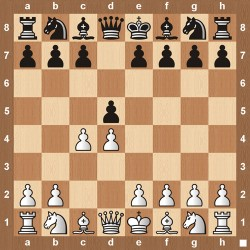
Answer: Competition and play are things of vitality. But we can reco-gnize such elements in several non-vital phenomena, and above all in coincidences.
1. The lowest, III league strategy, in my classification (Win Lose) modes are "games" of dead nature or those that approximately follow the prin-ciple of least action of theoretical physics. It is letting go of the strong and conquering the weak. We find the method of this strategy every-where, but in the III league (good people) it is predominant.
Trading, compromises, and consistently working so that "it's good for me and good for him," a distinct absence of sacrifice for the sake of victory, are the main features of that game, which otherwise loses to any other (II and I leag-ues). Due to the constant danger of losing support, politicians and politics are deep in this league, but the skill of lying and deception against their constitu-ents rises little. So, if it interferes in the affairs of the higher league, then the politics spoils the toy.
2. Reality is indestructible; the law of conservation protects it. It has no need for "survival," which is the main "obsession" of untruth and vitality, so winn-ing is a novelty in the freedom of vitality. The extra liberties we get with the lying powers, combined with the inconsistency, also add "sacrifice to win" as a competition tool. The ability to suffer is unknown to dead nature, at least not in the way we experience it, and, in the game of League II (manipulators), it is that weight that will outweigh the "good guys" when used well. We know that the Lose-Lose strategy almost always beats Win-Win.
Sacrifice to win, like a gambit in chess, is the power of lying in "bridging" sho-res otherwise completely separate for the natural course of things or separate deductive theories dealt with by Gödel's incompleteness theorems and algebra logic. Rarely, a successful politician or politics can really sacrifice himself for the sake of even greater success, because the majority of their support is "good people" (III League) who will not understand such a maneuver. Such "views from behind the hill" are especially the characteristics of the players of the First League (evil), because of which it is good for them to stay in the shadow of their servants (manipulators).
3. An unintentional sacrifice-like maneuver will be a random, less likely out-come, which is bound to happen sooner or later. But the tests of randomness in mathematics, the findings of mean values and mean deviations from the mean value, will reveal a will, an intention, which inanimate nature does not have. One will not successfully memorize the Gaussian bell curve or other random distributions that we use in fraud detection. Besides that direct test of randomness, mathematics has indirect ways, say, by counting the occurrence of leading figures in the results (Benford), whose arrangement the intention will spoil.
Looking at it this way, nature is the best deceiver. She would be if she were even a little interested in winning. However, the presence of the ultimate truth, or the absence of any deception, is the result of a lack of meaning in the play of still life. If she weren't so dead, she might envy us the right to die, to use that right as a token for profit, so that she too could feel the heat of the struggle for profit. I say metaphorically, of course, but how else to emphasize this apparently so irrelevant topic for mathematics. I also use the opportunity to once again underline the difference between how we see nature and what it is.
Uranilovka » srb
Question: Is the slip in Squared's answer (3. "a population of abundance has an increase in homosexuality"), or explain where you got that statement from?
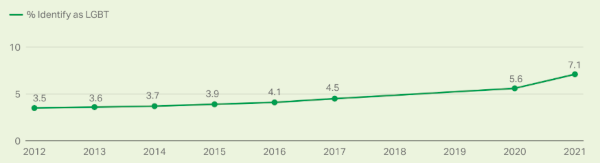
Answer: It's not a slip, but it is somewhat hypothetical. I know that the rise in homosexuality is, for now, interpreted exclusively by declaring it easier today than yesterday, but my texts are not only about known things of science. Of course I want them to prove accurate, but above all for future readers. This sometimes requires disagreement with current "truths.".
1. In experiments Death By Utopia on mice, Calhoun (1947) created for them perfect systems in which there were no predators, they had an abundance of food, and the initial mice, or rats, all had to be healthy. The only limitation was the available space. This allowed for extensive breeding, especially firstly with lots of free space.
When the population reached the limit after 600 days, the male mice simply stopped defending their territory. They became listless and began to gather in the centers of their universes. Gangs were formed that would explode into senseless and sporadic violence. Females stopped breeding and even started attacking their young. Their mortality increased phenomenally. Roaming mice either attacked or attempted to mount others, regardless of kin or sex; canni-balism became visible, and other depravities were displayed. These are the familiar quotes from Calhoun's experiments. For a quarter of a century, he repeated and varied his experiments and also interpreted them. They all ended in population extinction.
2. In the cramped conditions of the abundance of Calhoun's mice, principled minimalism is at work. It is the deepest and therefore the most hidden driver of many events that we prefer to interpret with shallower immediate reasons. We don't actually have any scientific reasons for those experiments (Calhoun's Rodent Utopia), so I warn you to those who might appear. For all of them, I believe, it will be shown that nature does not like equality. It will tend to distinguish outcomes because the maximum (Shannon's, 1948) information for given ranges of possibilities is their homogeneous distribution (Extremi, 1.5).
They will try to create clans gathered in the center, attacks to separate the dominant from the dominated, but it is in vain under the compulsion of equal abundance. Bisexuality has previously been mentioned (Rush) among ways of speeding up adaptation by procreation, and hence (evolutionarily abrupt) homosexuality as an attempt to slow it down. I also see the refusal to procreate among the ways of fighting against such equalities (abundance). When nothing against equality already succeeds, the population dies out.
3. The consequence of minimalism, and only incidentally experiments with mice, is the declining birth rate of civilized society (Overstated). Uranilovka (equalization of the right to distribution of goods) and uniform life in urban centers (work-home-work), with a crowded and uniform living environment, is the enemy of nature's tendency towards differences. Our legal regulation, which reinforces such a monotonous status, is too strong for its spontaneity. Therefore it responds to the decline in the birth rate. Currently, as a shallower "truth," there is stated the difficulty of raising children, the decline of our reproductive abilities due to food, air, and the like, and poverty.
In accordance with this, emphasizing the family and its internal hierarchy (father, mother, and children by age, or similar) would help to save the birth rate, generally contrary to modern state trends (Democracy). The great organization of society is otherwise a threat to the information of that society as a whole, and then to extinction. Hammurabi (reigned 1792-1750 BC) was a good legislator; also, Emperor Dušan (1349) is known to this day for his (Dušan Code), and I mentioned Suleiman the Magnificent (1520-1566), called the Lawgiver. They, as well as some others, are also known for the peaks of their epochs, after which their civilizations declined.
Nowhere, but nowhere in known history, will you find the decline of vitality due to too much legalization as the cause of the downfall of those civilizations, so I'm just mentioning it. I believe that you do not agree with me, and you do not need to write to me about it.
Deduction III » srb
Question: If everything is different from everyone else, then how does mathe-matics interfere with everything?

Answer: It is a long and very abstract story. It begins with Godel's theorems (Deduction II), that all "sufficiently strong" (contain significant theorems) and correct (does not prove false) deductive I types (mathematical) theory always contain statements (so-called Gödel's propositions) that are true but are not in that theory provable.
In addition to these is the discovery (Skolem) of infinite substructures and extensions and the applicability of such deductive theories (understood as mathematical, as well as in philosophy, linguistics, or computing). This is where I begin their "special story" in information theory.
1. The first step is to notice the equivalence of physical action (the product of changed energy and elapsed time) with information. An action with the trans-mission of some information and the appearance of physical information be-hind which some action occurs — we assume. It is not the equivalence of the usual bijection ("1-1" and "on" mappings) but of covering, i.e., "everywhere dense" sets.
For example, the set of rational numbers ℚ is dense everywhere in the set ℝ real numbers. This means that between every two rational numbers, q1, q2 ∈ ℚ, at least one real number, say r = (q1 + q2)/2, but also vice versa, between every two real r1, r2 ∈ ℝ there will be at least one rational, arithmetic mean of the data rounded to a finite number of decimal places. However, there is no bijection between those (Sets, 2nd assertion); the sets of rational numbers, as well as natural ℕ, are countably infinite, but the set of reals is uncountably infinite.
Since every real can be approximated by some rational number (everywhere dense), it makes sense to talk about the equivalence of action and information with predetermined accuracy. This is especially because the subjects of the "same" environment will always experience it differently. Apart from that, due to the uncertainty principle known in quantum physics.
2. In the second step, we note the connection between the phenomena and the laws they refer to. Not only does one fit the other like a lock and key, but they are one whole, and it simply does not exist without both. On the other hand, inanimate nature does not know how to lie, does not perceive lies, and does not react to them directly. Therefore, she does not perceive herself; she does not interact with herself, as we do (via knowledge) with her, because we do not reach her essential truths without using lies. Such a truth is an object with several agreeable persons; we can talk about weight and size, or speed and the like.
We can observe the structures or processes of the same phenomena in diffe-rent but correct ways and analyze different aspects in each. What is it but a multitude of theories about one object. Then, there are unlimited ways of possible subjects who observe such, each in its own unique way (Sprega Informacija, 2.4.2 Uniqueness). This is how we arrive at the Löwenheim–Skolem theorem in a typical (informatics) way here.
3. The third step is to connect. It involves seeing the two extremes of time within physical action and, on the other hand, the unattainable "essence" of the object of observation for dead subjects. First, let's look at the first.
The action ΔE⋅Δt = h is the product of the changed energy ΔE during the time Δt. Here we accept that photon time (almost at all) does not flow and that its effect is understood as a series of observations by an individual observer, for each one who perceives special energy of a series of such photons ΔE = hf, the product of Planck's constant h and frequency f = 1/Δt depending on the subject. Observers lend their time to photons.
It is a world of tiny time steps of subjects communicating within the world of physics. At the other end is the possibility of Δt → ∞, when there is no energy within the quantum of action, ΔE → 0, but they remain all the more attractive to other subjects with whom they can communicate. Places with slower time streams attract, but not everything communicates with everyone, so such quanta are candidates for laws.
4. No or subtle differences in said quantum possibilities lead to unusually large further differences. They resemble to me the deterministic chaos theory of Lorenz, who (1972) poetically described it with the butterfly effect: initiated by the tiny movements of a butterfly's wings in Mexico can create a tornado in Texas. Although I have explained Lorenz's theory and written about it before, I have not for a long time declared the apparently identical views on quanta of infinitely separated units of duration. These, I assume, represent the all-time laws of physics.
We are finitely small and negligible for infinite sizes, and yet we manage to perceive them. Not only in mathematics, where we understand even the differences between infinities, but also by participating, interacting, or communicating with their parts around us. That is why we can consider these infinities as "real." It is incredible, but we manage to prove the Pythagorean theorem, that the sum of the squares of the legs a and b is equal to the square over the hypotenuse c of the right triangle, a² + b² = c², although it cannot be established or disputed so accurately with a physical experiment.
Similarly, we know that "2 + 2 = 4" even though we cannot exhaust all the possibilities of such an addition by proving it correct. Namely, we will check that the sum of two and two glasses will be four glasses and that two apples plus two apples are four apples. Thus, we can add two plus two sheep in the meadow, planets, and then galaxies, but no matter how hard we try, there are still infinite options for the sum "2 + 2 = 4" that we have not checked. It is just as "inaccurate" to us as we are finite concerning its all-times. With vitality, we succeed in deceiving even dead nature itself by learning about its the things inaccessible to it.
5. The laws by which the substance behaves can be so abstract (lat. abstractus: isolated) that they are outside the objective world. All oblique shots are subje-ct to the same law of terrestrial acceleration, but each one is different in place and part of its trajectory. It is everyone's and no one's because it is different for everyone.
Entropy II » srb
Question: What happens to the entropy of living things? I guess it would also like to grow spontaneously.
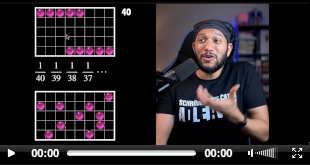
Answer: The entropy of living things also increases spontane-ously. One of the reasons for aging and dying is such a flow. However, the common understanding of entropy in relation to information is exactly the opposite of the one I am practicing here. And the video on the right is among the best for explaining classical entropy, so watch it first, and then my follow-up (Entropy).
1. Spontaneous phenomena tend towards states of greater probability, less in-formation, and less action. This is due to the casual nature of both processes, leading to a correlation between higher entropy and lower information. Where there are fewer interactions, there is less communication, and therefore the overall emission of information is also lower. The structure of rarefied gases is like this: they have lower temperatures and higher entropies. By compressing them, their energy and information increase, and entropy decreases.
By the term "Intelligence," in the book Information of Perception (2016), I mean a measure of the ability to interact, that is, communicate with the envi-ronment. It (I) is thus proportional to the freedoms (S) that the environment allows and inversely proportional to the restrictions, the hierarchy (H). Then freedom is proportional to intelligence and hierarchy (S = IH), which for a complex system of different perceptions is in total:
S = S1 + S2 + ... = I1⋅H1 + I2⋅H2 + ...
where Ik and Hk, index k = 1, 2, ..., intelligence and hierarchy of individual parts of the system. I'm not just talking about living things. From this sum, we see that the "interaction abilities" (Ik), decrease with the distance of, for exa-mple, gas molecules, so this quantity (S), which I call "perception informati-on," decreases with increasing gas entropy.
2. By eating, we gain energy to maintain body temperature, low entropy, and high information. Metabolism (Greek: μεταβολήσμός means change) is a bi-ochemical process, among other things, of modification of chemical compo-unds in living organisms and cells. We are consumed and renewed by these changes. Our tissues are copied, and those copies continue to be copied like a long transport of messages through a Markov chain through which noise grows. Gears of transmission are piling up; we are constantly changing. As we get older, the processes of maintaining the impulse that gave us excess info-rmation (vitality) in relation to the dead physical matter that we are made of become worse and worse.
Those initial conditions are different forms of equilibrium, such as our planet is in today with the consumption of carbon dioxide by plants that create waste oxygen for the same animals to use and return it in the form of carbon dioxide. However, balances are often temporary, or are disturbed so slowly that we do not notice it. And in the cases of aging of living beings, they fail to find adeq-uate flows through which life would go and go further in maintaining the fic-tion in connection with physical reality. This means decreasing information and increasing entropy.
Hierarchy II » srb
Question: In interpreting perception information, you say that freedom grows with the ability to use it and the hierarchy too. Does it turn out that freedom is proportional to unfreedom?

Answer:Yes, in the answer (Entr-opy II) defining "intelligence" I as the power to use "freedom" S, we get that so freedom is also determ-ined, and it is proportional to the "hierarchy" H. In the absence of an expression for "effective limitati-on." I did not "discover hot water" there. This dependence has been known since ancient times.
1. The association of animals within the hierarchy achieved by evolution could reduce their individual freedoms, but to the benefit of a more significant revi-val, greater freedoms of the group itself. Information perception: Let's notice, though, talk about the connection of information. So to say, such is the more efficient structure of the association; for example, though, of chimpanzees, which, despite the danger of much stronger individual gorillas, still spread that species along the equator, unlike the bonobo monkeys, the closest relatives of chimpanzees, who did not reach beyond the Nile Delta and live in looser communities.
2. Not every hierarchy is equally successful. Differences in the structures of cells and tissues of living things may give them better adaptation to certain habitats, but there are also wider bad organizations. In general, "worse" are the structures of lower probability, i.e., larger information. This is how we know networks of peer links that spontaneously adapt into more successful ones with few nodes with many links and many nodes with few of them. For example, such is a free market with flows of goods, money, and services as links, and nodes as firms and owners. It accelerates in terms of turnover, which is more efficient as the range of owners and non-owners of goods, money, and services increases.
3. An interesting example of this is the universe itself. Gravitational attracti-ons are places where time moves more slowly. These are accumulated masses in the form of planets, stars, and galaxies that lag in the past compared to the voids between them, which seem to rush without them into the future. On the one hand, this is how to explain the increasingly certain future in view of the fundamental minimalism, and on the other hand, "dark energy," because there is more and more space, and it is an increasingly rare substance. The universe spontaneously becomes an "organized structure" in the sense of a lack of options and a greater range, with greater freedom over a longer history.
4. In addition to the efficiency of the company, politics, or military, which is of the type in the first paragraph, then the network mentioned in the second paragraph, or the achievement of a larger range in the example of the third, I often mentioned the achievement of momentum. Like a pickaxe that we swing more and more to make it hurt deeper, excess freedom becomes a necessary potential for the reduction of great creators in literature and art, or science, entrepreneurship, and in general. Absurd as "freedom in unfreedom" of the question asked. Still, it is verifiable (Letter Frequency) that a more meaningful text, written by better master stories, expressions, and words, is less informative.
Non-physical » srb
Question: Is there something physical in non-physical phenomena?
Answer: Not that there aren't any, but I'm only in working options for now. Like everyone else, I am relu-ctant to publish them (I have no completed research).
We usually consider "physical" that which can be measured. Such qua-ntities are mass, acceleration, force, temperature, length, density, ..., and after them come the processes by which we design measurements, then there are intentions, ideas and our actions, without which these proce-sses would not appear by themselves. Let's not forget about the interpretati-ons of the measurement results, nor about the laws of nature that we find or confirm with them. I list these extensions as an introduction to the topic that produced the question asked.
1. Information cancels the uncertainties it brings and represents. It unloads the news, and the news disappears; announced news ceases to be news. This means that the information is basically fiction. Like the types of energy that change forms while conserving the total amount, information itself does not last but disappears and is regenerated in the same measure. The substance is all waves (Louis de Broglie, 1924). Waves change phases but carry constant momentum and energy. In addition to geometric forms, for example, a part-icle-wave of light (photon) induces an electric into a magnetic phase and vice versa. Consequently, all matter is both physical and non-physical in nature.
I remind you, here it is physically real if it is observable, permanent, and acc-urate. Not fulfilling the second condition, the very essence of information lea-ves us with the possibility to consider it a part of the structure and unreal but existing phenomena. That's where I'm directing this story.
2. Given the principled minimalism and the need for inaction, the property of information to be regenerated tells us that there is some "spontaneous force", as I called it earlier, which is the law of conservation of information that mak-es it valid. If we call the disappearance of information an "action" that triggers a "reaction" of the creation of information equal in intensity, we are talking about fictitious forces. Thus we return again to "information of perception," which I have long treated as a type of physical effect.
Starting from the magnitudes of uncertainty relations, Δp⋅Δx = ΔE⋅Δt = h , now with wavelength values λ = Δx and h/λ momentum during "action and reaction." They are two expressions of equal value for the physical actions of the amount h ≈ 6.626×10⁻³⁴ Js values of Planck's constant. Energy changes ΔE amount are hf, with frequency f = 1/Δt. But the change in energy is equal to the work done by the force on the path, ΔE = F⋅Δx, so F ⋅ΔxΔt = h. This formally reveals the "spontaneous force" of the quantum of action.
3. This interpretation goes further in the 4-dim space-time of Minkowski with x4 = ict by the fourth coordinate, the imaginary (i² = -1) path (ct) which would make light at the speed ( c ≈ 300 000 m/s) crossed during t. For example, if the first three Cartesian coordinates are x1 = x, x2 = y and x3 = z, then the components momentum has four p1 = px, p2 = py, p3 = pz and the fourth term p4 = iE/c, energy. We then treat them all as quanta of action, not necessarily each of the same intensity, but with a conserved effect in each of the directions.
It gives the "perception information" of space-time:
S = p1⋅x1 + p2⋅x2 + p3⋅x3 + p4⋅x4
which has not been new in my writing for a long time. The interesting thing is that such sums of products can be functionals when momentums and positions are separate vectors and dual vectors to them. Moreover, given the different notations of functionals in various vector, i.e., metric spaces, as well as p-norms, we get an unusually broad insight into perception information.
4. This is just an introduction to the point of quantum effects of "not required the same" value. Of course, it is not a necessary addition to the previous one, but it is one that would relate to the question asked. When we talk about these sub-physical actions, then we open the topic of the insufficient "force of spon-taneity" for the regeneration of spent information. Such information is under the radar, not delivered to the world of physical reality, and is fictitious. It is also an answer to the question, perhaps the closest of the above.
Under this, it is considered that the parts of insufficient force combined build (real) quanta of action, because even the simplest particles-waves, such as photons, have more integrated properties. The assumption, then, is that some virtual communities could be maintained, although their isolated parts, left to themselves, could disappear.
Particular » srb
Question: Explain to me that notion of "dual" position and momentum vectors?

Answer: From the question about duality, it is recognized that is not knowing more algebra and functi-onal analysis (invariants) is a pro-blem, so the answer should be sim-plified. The question followed the previous one.
In mathematics, duality is a type of uniqueness in a special way. Like your reflection in a mirror, or like the processes that led to the unique person you are, among billions of others who are not. As the product of the particle's momentum and position, p⋅x = h, which for the same value of p could not give a different position value, because it would be:
p⋅x1 = p⋅x2 = h, p(x1 - x2) = 0, x1 - x2 = 0,
i.e. x1 = x2, since the momentum p ≠ 0, and h is (Planck's) constant. But momentum and position are not the same phenomena.
1. Numbers are a straightforward vector, so the given example from quantum physics also belongs to algebra. Arrays are just a slightly more complex type of vector. Then vector a = (a1, a2, ..., an) means that we have some base, n-tuple of vector e1, e2, ..., en, so we can write:
a = a1e1 + a2e2 + ... + anen.
Points A(a1, a2, ..., an), the vertex of the vector a starting from the origin of the coordinate system, is the dual base n-tuple of the vector. More precisely, the sequence of point A, i.e., the vector a, is uniquely (say dually) matched by the sequence of base vectors ek, respectively for k = 1, 2, ..., n. Namely, if we assume that there is another sequence that defines the same point, for exam-ple, A(b1, b 2, ..., bn) in the same base, then:
a = a1e1 + a2e2 + ... + anen = b1e1 + b2e2 + ... + bnen, (a1 - b1)e1 + (a2 - b2)e2 + ... + (an - bn)en = 0, a1 - b1 = 0, a2 - b2 = 0, ... , an - bn = 0,
for the basis vectors are linearly independent, so a1 = b1, a1 = b1, ..., an = bn, which means we have no different but the same sequence. The linear indepe-ndence of vectors is precisely the uniqueness of entries in each base of a given vector space, so the bases and the vectors determined by them are dual vectors.
2. When we interpret the vector space as the environment and the vector as a subject that can communicate with it or just observe it, we have only develop-ed the idea of quantum physics into the macro world. Quantum systems, such as atoms or molecules, harmonic oscillators, superconductors (materials with zero electrical resistance below the critical temperature), photosynthesis pro-cesses in plants because they involve quantum coherence, and others, are int-erpretations of vector spaces with their states, which are then vectors. Like atoms and molecules, also discovered in microphysics and undisputed in the macro world, I do not dispute vector interpretations either.
3. Linear functions are maps of vectors to numbers. Examples are sums of products, Q = a1b1 + a2b2 + ... + anbn, a interpretation of them is information of perception. But, for each function, f : a → c, where c is a constant determi-ned by the vector a = (a1, a2, ..., an) and the function f, there is one and only one vector b = (b1, b2, ..., bn) so that the dot product is:
f(a) = a⋅b = a1b1 + a2b2 + ... + anbn, ∀ a.
Namely, from f(a) = a⋅b = a⋅b' follows:
a1(b1 - b'1) + a2(b2 - b'2) + ... + an(bn - b'n) = 0,
so since this holds for every vector a = (a1, a2 , ..., an) will be bk = b'k for each k = 1, 2, ..., n. Therefore, b = b'.
The functional f is uniquely determined by the vector b by the scalar product with the variables and vectors of the given vector space. In other words, the perception information (a⋅b) of arbitrary environmental states (a) belongs to one and only one subject (b). That is, no different subjects could perceive the (same) environment equally. The environment and what perceives it (in the case of an inanimate substance, it is spoken of as interactions) are dual vectors.
4. Let's not forget that the subjects mentioned here, as well as their objects, are not the only realities. In contrast to such concrete, finite perceptions, there are also infinities, realities of laws to which they adhere, which are inseparable from these, and yet abstract and seemingly only their own. They are also real, but they are ubiquitous and timeless in the sense that they exist in fragments almost everywhere. Such abstractions belong to deductive logics of the first type (usual) and are another topic.
Synergy II » srb
Question: Do I understand correctly (Non-Physical, 4) that you are saying that associated fictitious phenomena can become real?
Answer: Yes, it's like that. They are new topics, and I lack good expres-sions, but the closest ones are syne-rgy and emergence. I have already written about them, but they are not exactly what we need now.
1. An example is half-truths using the photoelectric effect. Another is the emission of electrons from metals under the influence of light (Hertz 1887), when more light emits more electrons but does not change their energy. Photons of a certain wavelength drive electrons (Einstein, 1905). The flight of more electrons, equal to the additional energy, will be with more incident photons of the corresponding same wavelength. The first mentioned are "fictions" (inaccurate, fragile, or invisible phenomena) that can thus be triggered or attached to the "real" (accurate, permanent, and visible). Then we get a lateral oscillation, at first glance irrelevant to the longitudinal motion of the wave.
2. Coding is a way of emphasizing that not everything communicates with eve-ryone. For example, the sentence "Today is a nice day." becomes "Upebz jt b ojdf ebz." when we move each letter one place alphabet and the text becomes illegible. Caesar Cipher is a classic example of ancient cryptography that invo-lves shifting each letter of a plaintext message by a certain number of letters, historically three. Among the types of such substitution ciphers, where letter by letter is replaced by another in consistent ways, is the Vigenère code with a link that you can try right away.
For example, leaving "Encription", enter "Keyword: Monday" before "Text: This is a test text." and click "Submit". You get "FVVV IQ M HRVT RQLG." Copy the output and press "New Query", then choose "Decryption", and after sending the copy (code) with the same keyword, you find the decode: "THIS IS A TEST TEXT." I wrote the program in PHP language whose content is not available to the user of the page, but I have similar ones (code and decode) in Python that you can freely rewrite.
3. Nature is full of such "codings." It embodies the uncertainty inherent in its existence. Scientists and many others who seek the truth are engaged in "unl-ocking" the secrets of nature, and perhaps the world's greatest wonder is pre-cisely the complexity, unpredictability, and consistency in their concealment. On the other hand, similar "hidden places" can also be found in phenomena whose "locksmith" does not have to be a living being.
When the decode does not exist so that the secret remains completely inac-cessible, then it does not belong to our reality even though it may "exist" in some other sense. If we deal with "real," then we deal with available, perm-anent, and true phenomena. With all three mentioned at the same time.
4. It is estimated that phytoplankton creates about 70 to 80 percent of the oxygen for the atmosphere. Such unicellular and colonial microorganisms were the only inhabitants in the first billion years of the creation of our pla-net, when there was no free oxygen (O2) in the air, which this plankton exp-elled as waste by feeding on carbon dioxide (CO2).
Such creatures lived in water, in seas and oceans, persistently making free oxygen for hundreds of millions of years, a gas that still did not reach the surface. In the meantime, it attached itself to the iron dissolved in the water and created rust that was not soluble in that environment. Rust would settle at the bottom of the sea, and the processes created the illusion of endless balance—living things that feed constantly, creating waste that is constantly disappea-ring. But once the molten iron in the earth's waters disappeared and oxygen began to fill the atmosphere.
I cite this as an example of the "unlocking" of phenomena (the emergence of animals) from spontaneous processes that would proceed without the action of reason. At every step, we see similar ones, from chemical reactions of the formation of compounds with a very important sequence of events, pace, and presence of certain ingredients to the formation of artificial elements that do not exist without the influence of scientists, and all the way to the most subtle physics.
5. We see a body collapsing into a black hole (a celestial body with such a large mass that it does not allow even light to escape) with an increasingly slow pas-sage of time. Its fictitious particles, insufficiently energetic for their own (pro-per) time flow, thus become visible and real for relative, external observers. They supplement reality, that is, information that seems to perish as the body sinks into a black hole. In this way, the law of preservation of information re-mains valid, by "unlocking" phenomena that remain "locked" even for the body that owns them.
6. Finally, let's notice the settings of the Doppler effect, now as combined ficti-tious phenomena that are revealed as different realities depending on the obs-erver's point of view. The vertical (transversal) relativistic Doppler effect is viewed as special (θ = 90°):
\[ f'_{\perp} = f_0 \sqrt{1 - \frac{v^2}{c^2}}, \quad \lambda'_{\perp} = \frac{\lambda_0}{\sqrt{1 - \frac{v^2}{c^2}}},\]which is otherwise absent in the non-relativistic, classic Doppler effect of sound, nor do we take it today for other, slow waves. When we see better, we have it because there is a movement of the light source; that is, it is a reality created from combined fiction. Otherwise, each subatomic particle gives a Doppler effect in fast movement, but such that it perfectly reproduces the changes known to us from the classical picture of their energies.
Method » srb
Question: Tell me about the method you use. Do you follow a similar routine?
Answer: I certainly have my own research methods and habits. Eve-ryone has them, some methods or styles of work, and even those who we consider to be no researchers—they are unique in dealing with the uncertain. It is a general phenome-non of the unrepeatability of subje-cts. That's where I'd start.
1. The beginning of the novelty is a coincidence. But the brain likes to follow familiar paths, so all the art of origin-ality is how to subvert the unknown to the familiar. That's why we gather kno-wledge while waiting for unique eureka moment, risking being trapped on the paths others have made. That is why it is so much easier to narrate someone else's science than to create a new one, just as it is easier to listen than to rep-roduce. That's why there are so many amateurs among the creators.
In the last sentence, I meant great amateurs in science, or writers or any other artists who do not have the benefit of attaining appropriate faculties, and even successful business entrepreneurs. In order to reach their great creativity, the approval, guidance through schools, or other guidance is not enough; without the anger that, for example, can be ignited by a teacher who told a student that he will never become anything.
2. How to trick your brain and lead it to be original, I explained once in a bar, is by writing down possible ideas in a notebook that you should have at hand wherever you are and then burning that list, destroying it. If you save it, your subconscious will know it, and the next time it hides deeper, it will better run away from its hateful uncertainty. However, step by step, making and destro-ying such lists without regretting them, you will open up, teach yourself not to be afraid of the unknown, and become more creative. It is only the beginning because children are also creative, but what is it worth to them.
3. We present the theory while we have starting from initial rules, axioms or postulates, unproven propositions, and requirements for evidence. However, it is a story of deduction that becomes relevant to us only after many succes-sful researches. Before that there were heaps of groping in the dark, like the following.
For example, if the above paragraphs (1) were encoded using Caesar's method (shearing the alphabet by three letters) or some other permutation of letters, we could count (e.g. with Word) as having only 860 characters, including spa-ces, or 727 without spaces, with the appearance of the (Cyrillic) letter "a" only 83 times and 3 times with the appearance of the Latin "a" (replace "a" with "&"). Counting on 86:727 = 11.8 percent of such letters in the original text, as well as the others, we will find them as many in the (Caesar's) coded text.
In English texts, the letter "e" is the most common (12.5%), and the letter "a" (8.2%) is only the third (after "t": 9.1%), so when making statistics of the app-earance of the letter in the coded text, we can get an estimate of the replacem-ents and then reveal the ciphertexts, as long as they use the same encryption method. As when we work with the regularities of large numbers of random-ness, deciphering from randomness, with an ever-increasing volume of texts, passes into certainty.
4. Different languages have different alphabets as well as letter occurrences, but in all of them, meaningful texts will not have their uniform distribution. Homogeneous distribution has the most information, and it is a phenomenon in nature to run away from such. The consequence is that the text leads us to the idea of the writer, narrows the choices, and, on the other hand, such a text enables decoding if the message is encrypted. It is similar to nature itself. We are surprised by its arrangement and even more by our ability to decipher it.
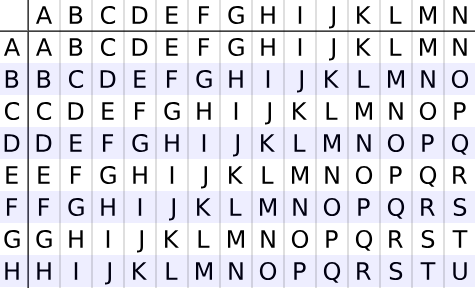
5. Vigenère's encryption uses Caesar's method multiple times, as many fields as the alphabet that is the position of the letter in the key. Go to the link at the top left of the image of the complete square table of the alphabet, each row of which is made by moving the previous one to the left. With the key "Monday", the first letter of the source text is encoded by replacing it in the vertical with the one in the horizontal that starts with "M". When for the given text, which is “This is a test text.”, it is the letter “F”. Below the second letter of the text "h" is the row "o" of the second letter of the key, where we then find the letter "V". Again, the "i" of the text is now in line "n" of the third letter of the key where the letter "V" is. We do not encode blanks and non-alphabetic characters, so we find the encrypted "FVVV IQ M HRVT RQLG."
Note that the same letter "V" in different positions of the code can be from different letters of the given test because they can be found in different lines of the key. That's why Vigenère's code is called impenetrable in the case of short texts, which I normally use to hide passwords and rarely any more. However, the replacement letters in the word themselves indicate "I", or "A" in English, and vowels (more often the conjunction "i") in Serbian, so decoding can begin that way. Thus, there are ways to break even an "unbreakable" cipher, if only we have enough text. And so it is with the laws of nature. What we can't unde-rstand, we easily believe that it doesn't even exist, which further protects us from the unknown.
6. Overall, my research method goes from "the blind hen that pecks at the grain" to checking for deductions in the findings. Bigger ideas rarely come by sitting and waiting on them, but they do come unwanted, usually when I am in some company with whom I would never admit what I actually do, and so they fail and are easily lost in oblivion. Fortunately, they are not a matter of career for me, but just fun, a hobby.
Unclear » srb
Question: To protect ourselves from uncertainty, we believe what we cannot understand does not exist. I like that sentence in the conclusion above, but how accurate is it?
Answer: It is debatable, yes, and it is as true as my story is true. It agr-ees with Gödel's Second Theorem that no very strict deductive system can prove its own consistency. If we open every door, we find some new door in the room, but we live beau-tifully without even opening it.
1. Let's try to understand this with the ground of reality intersected by rivers and canals bridged by fiction. Göd-el's first theorem tells us that truths (deductive theories) are always isolated and are inside some set of islands, with fictitious obstacles without which there is no further. A consistent theory (which contains truths and only tru-ths), no matter how comprehensive, will always remain without some truths. On the other hand, each such theory is just an unfinished story.
2. When we follow the idea of decoding (Method, 3), starting from uncertainty and apparently arriving at certainty, let us not overlook the aforementioned representations of "islands of reality" with extensions over "bridges of fiction." The bases in the micro world are indeterminacy (of space-time, momentum, and energy), i.e. quanta of action. They are on that lower side a "water obsta-cle," or a fence on "reality" that needs to be crossed with "fiction." It is the end of a consistent (without inaccuracy) theory, which is precisely because it is incomplete — from Godel's first theorem — that it would then be "under the radar" of physics observations.
I throw in a lot of metaphors to make the otherwise difficult theorems of logic easier to digest. Let's note the non-contradiction of this story, in response to a question often posed to me: how is it that we can always research further and further and always come across deductions and determinism, and therefore find inevitability and yet have objective arbitrariness. It is a subtle, difficult question if properly understood. However, it has an easy resolution in the answer using the given "word breaks.". I take it with a grain of salt.
3. A more precise way of understanding the same limitations is more abstract. It is in the limitation of the vector space by the dimensions of the given bases and the requirement of linearity when adding them together in defining the state (vector). But then, we lose the ease of understanding the discretion of the information we encounter every day. Theorems are "packages" of them, as well as the steps in their proof, also legal paragraphs. All the ideas available to us are finitely divisible, but they are so bound to the remains of reality that we can also perceive infinities through them, as much as possible with the help of finite fragments. We go further than dead physical nature alone could because we are its fusion with fiction.
3. A more precise way of understanding the same limitations is more abstract. It is in the limitation of the vector space by the dimensions of the given bases and the requirement of linearity when adding them together in defining the state (vector). But then, we lose the ease of understanding the discretion of the information we encounter every day. Theorems are "packages" of them, as well as the steps in their proof, also legal paragraphs. All the ideas available to us are finitely divisible, but they are so bound to the remains of reality that we can also perceive infinities through them, as much as possible with the help of finite fragments. We go further than dead physical nature alone could because we are its fusion with fiction.
There are also discrete vector spaces that support this analogy, but that is of little help if we are not good at abstract mathematical thinking. However, this separation of vector spaces by the dimensions of their vectors helps the unde-rstanding of incompatible phenomena in general and especially the contradi-ctions of opposite statements when we want to put them in the same theory. Similarly, "non-communication of everything with everyone." The dimensions are then almost as understandable as the aforementioned islands surrounded by water.
4. No matter how many dimensional spaces (n-dim) the vectors a and b belong to, such two intersect one plane (2-dim). Therefore, the interpreted states and their scalar product, i.e., information of perception, exist in two dimensions as well. Communicating with what we can, we are in one narrow 2-dimensional world, although we and the object of perception may be from very different worlds. This isolation allows us the illusion that the rest of reality does not exist. It frees us from fears of excess uncertainty.
On the other hand, no matter how we were lulled into certainty, whether it was a small or a big illusion (states without uncertainty are theoretically not possible), there are always some triggers, small initial events with big conse-quences that, like "the movement of a butterfly's wings in Mexico, cause a hurricane in Texas." (as Lorenz, the founder of deterministic chaos theory, said). Translated into this theory, we cannot completely isolate ourselves from the rest of reality.
***
There is a lot that we understand that we do not understand, but that is only a part of what we do not understand that we do not understand, and it is only a part of what we even can't understand that we do not know.
|
|
|